

Tending What Grows
What a dying patient taught me about hope and what the garden teaches us about living


The Most Precious Fruit
When I worked as a chaplain at a cancer hospital, one of the supportive patient programs was horticultural therapy. In a rooftop solarium, patients could put their hands in dirt and plant seeds. Some enjoyed the artful trimming of small bonsai trees. Others relished the flower-arranging classes, the products of which were delivered to patients who were too sick to leave their rooms.
I conducted many pastoral conversations in the solarium (even though this was long before my farmer-ish days). It was there that I first met Lola, a lifelong city-dweller, who had never grown anything before. She joked, “All the plants in my apartment are fake. I can’t keep anything alive. I have brown thumbs.”
After intense cancer treatments, some days she couldn’t even hold the watering can, but she still liked to be taken to the sunroom to see how her plants were doing. Her tomato plant was on the cusp of flowering, and she whispered to me “I don’t know that I’m going to live to see a tomato on this thing, but I’d really like to.” She did get to see one and it brought her joy. She couldn’t eat it because at that point, she wasn’t eating much at all. She insisted her favorite nurse do the honors of tasting it. In the last days of her life, she had small moments of delight in knowing her plant was flourishing.
When Lola died, her plant was among the belongings given to her son. I hope it’s still sitting on his windowsill, maybe even producing fruit.
What an act of hope to keep tending life as she was preparing to leave it.
The garden teaches us things we often only learn when life is at its most fragile.

Planted in Hope
Most of us are thankfully not approaching the end of our lives today, but there are so many lessons we can learn from the garden. Your thumbs might be all brown like Lola (mine were for the longest time!), but gardening can be a transformative spiritual practice that grounds us when life is overwhelming.
“When we garden, we practice hope, putting our faith in nature’s ability to bring forth life, to create something beautiful and nourishing from the modest ingredients of soil, seeds, and time. In other words, gardens are places of health, hope, and healing.” - Pamela Dolan
Here are some gifts that gardening can provide as it relates to health, hope, healing and the human experience.
Finding God in the Weeds
I often think of Brother Lawrence, the 17th century Carmelite Monk, who prayed during his assigned duty of washing pots and pans in the monastic kitchen. He viewed a mundane task as a welcome opportunity to connect with the divine. We can elevate anything profane to sacred with the right intention. This is forever in my mind as I kneel in devotion, yanking weeds and talking to God.
Many people tell me they are not good at meditating. When I ask what they’ve tried, my spiritual direction clients describe sitting on the floor with their legs “crisscross applesauce,” willing themselves to clear their minds for 20 minutes. This can work for some people, but it is far from the only way to pray. The mind-body-spirit connection is real and we should tap into that to deepen our mindfulness practices.
Meditation happens easily in the garden.
Even in the never-ending task of weeding, we can connect to the divine. In fact, sometimes busying our hands helps our minds to slow down.
When I first started gardening, I used to listen to podcasts or audiobooks while weeding. Now I listen to the wind carrying the sounds of nature. Often, that’s my goats bleating or chickens clucking, but it’s also birds singing. Someone told me that birdsong resets our nervous system because birds sing only when they feel safe, so it’s a way of reassuring us that we are also safe. Gardening is an immersive experience that forces us to be in the present moment.
It is quite possible to be so fully involved in the garden that you lose track of time, in the best way.
For anyone who struggles with screentime, may I suggest gardening? Half the time I don’t know where my phone is and when I find it, it’s covered in dirt.

Waking Up to Life Around Us
Gardening is not just about growing plants; it’s about being in touch with the world around you. When we cultivate the Earth, we pay more attention to it. It’s checking the weather to see when it’s time to plant annuals. It’s noticing what flowers the bees are gravitating to and filling their pollen baskets. It’s realizing there is bird poop on your sweet pea tendrils despite the pinwheels you put out to scare them away.
Gardening has made me more curious about nature. It has changed how I move through the world.
When I’m walking or driving around, I am tuned in to the flora and fauna. This noticing wasn’t intentional, just something I realized I was doing after spending time in my own patch of dirt. Sometimes I pride myself on knowing the name of a flower or plant. Other times it’s something I’ve never seen before and I go on a deep dive, figuring out what it is and how it grows.
Being attuned to the natural world can open us up to new ways of experiencing the grandeur of creation. It is an easy way to be transported to life outside ourselves.
There is also an experiential and creative element to gardening. I’m not a scientist, but this curiosity leads me to experiment. Every year, I add different vegetables to see how they grow. This year is loofah and bok choy. Last year, it was pumpkins and cucamelons.

Tending What You Feel
“To plant a garden is to believe in tomorrow.” - Audrey Hepburn
Gardening is an act of hope. It requires optimism, patience and a little faith. The first time I started my own seeds, I was shocked that it worked and new life was sprouting, in late winter, when everything else was cold and dark.
Soil metaphors are profound as they give us the power to reframe our suffering. There is hope in the germination that things are going on below the surface, even if we can’t see it. And they remind us that the season we are in now will not last forever.
How often have we felt the darkness of winter and not been sure spring would come and bloom in our lives?
The metaphor of the garden invites deep reflection:
What do you want to see grow?
What season are you in?
What is happening beneath the surface of your life right now?
Gardening can lift our spirits and inspire us. It can give us a sense of control when we feel like we have none. But the garden doesn’t just teach us how to be present, it teaches us how to endure.
“Sometimes when you’re in a dark place you think you’ve been buried, but you’ve actually been planted.” - Christine Caine
Gardening can also break your heart. Some situations will make you curse and tempt you to throw in the towel. Like when the raccoons ravaged all my corn right before I go to harvest it. Or the seedlings that I spent months nurturing didn’t harden and take root. Or the frost that came in late spring and ruined my peonies this year.
There is also an undercurrent of grief in every garden. At the end of the summer, the flowers must be “deadheaded,” and my raised beds have to be “put to rest.” The temporal nature of a garden is part of what makes it precious. We tend to what we love and then we say goodbye. There’s no guarantee that it will come back next year.
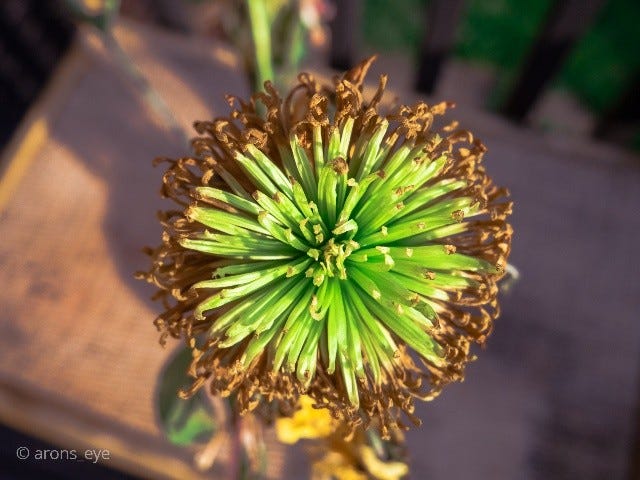
“We come from the earth, we return to the earth, and in between we garden.”- Alfred Austin
Gardening is a lesson in perseverance. Growing requires resilience. We must learn as we go and change courses accordingly. Even in the garden, I can’t really control the world around me, but I can learn from it. And this year I didn’t plant corn.
As someone who habitually takes on too much, this hobby can feel like a lot of work. There is always something to do in the garden. Sometimes the chores can seem endless. And those weeds just never stop coming. As an antidote to overwhelm, we must remind ourselves just to do the next thing, whether that’s in the garden or life.
What Will You Grow?
Maybe you have a houseplant, maybe you have several acres. Or maybe you have nothing planted at all (yet). Maybe you can just take refuge in knowing the season you are in now is not the one you will always be in.

My friend Dr. Almut | Weary Pilgrim has been writing about gardening as a spiritual practice for quite some time (she even has a section on her Substack dedicated to it!). Here is one of her blessings, although I encourage you to visit her post directly so you can gaze upon all of the lovely photographs of her garden too!
May you find small openings in your day—
to put your hands to what is growing,
to listen to what is honest,
to sort what no longer serves,
and to carry what is yours
lightly,
like a basket of clean clothes in the sun.
What is one way you’ll plant hope this season, whether in the ground or your own life?
What embodied practices (like gardening or dishwashing) deepen your spiritual life?
And if you do have a garden, what are you excited to grow this year? (And if you don’t have a garden, you are welcome at my house anytime to pull weeds with me!)
Fun Bonus:
Another aspect of gardening is that it’s a gateway activity to other hobbies like beekeeping and goats. As a fun giveaway, the first ten commenters will get a bar of homemade goat milk and honey soap! (Message or email me your address).
Also, as a thank you to paid subscribers, you’ll get soap and a bottle of honey! Please send me your address after reading!


So beautiful, Christine! Thank you for another great piece!
One of my favorite things to plant is garlic. I love that we plant it when everything else is dying down, knowing that it is there waiting during the long winter, seeing it emerge in early spring.
Plus you get two crops (scapes and bulbs), so double the delight.
And yes, I can lose myself weeding.